After a tree has been felled, the remaining stump may gradually soften and decay. Natural decomposition is expected, but a rotting stump can become inconvenient when it occupies a frequently used part of the garden, interferes with landscaping or begins to break apart unevenly.
Removal is not always essential. A stump in a quiet, unused area may be left to decompose if it presents no practical problem. The decision should be based on its location, condition and how the surrounding space will be used.
When Removing a Rotting Tree Stump May Be Sensible
As decay progresses, the stump and its remaining roots lose strength. This can affect the ground around it and make later garden improvements more difficult.
The Stump Has Become Unstable
A rotting stump may feel firm at the surface while containing extensive internal decay. Sections can collapse when stood on or struck by garden equipment.
This is particularly relevant when the stump is close to:
- A regularly used path
- A lawn or play area
- A seating space
- A driveway or parking area
- Garden steps
- An entrance or access route
Removing or grinding the stump can create a more predictable surface in areas used frequently.
It Is Becoming a Trip Hazard
Low stumps can be difficult to see once grass and surrounding plants grow around them. Exposed roots may also remain raised above the soil even while the central stump deteriorates.
A stump positioned within a lawn can obstruct mowing and make routine maintenance awkward. Where it affects movement through the garden, removal can improve access and usability.
The Ground Is Beginning to Sink
As the stump and larger roots decay, their volume gradually reduces. Soil may settle into the resulting spaces, creating depressions or uneven ground.
Simply covering the stump with topsoil rarely resolves this problem. The buried timber can continue decomposing, causing the area to sink again. Stump grinding removes much of the remaining wood and allows the resulting space to be prepared more effectively.
Fungi Are Appearing Around the Base
Fungal growth is common around decaying wood and does not automatically mean nearby healthy trees are at risk. Many fungi are simply breaking down dead material.
However, repeated fruiting bodies can indicate that decay is well established. A tree surgeon can assess the stump and surrounding area if there are concerns about the condition of nearby woody plants.
Removing the stump will not always eliminate underground fungal material immediately, but it removes a substantial source of decaying timber.
The Stump Is Attracting Insects
Rotting wood provides habitat for a wide range of insects and other organisms. In a quiet part of the garden, this may contribute positively to local biodiversity.
It may be less desirable when the stump is positioned beside a building, patio, shed or busy seating area. Removal can be considered where insect activity is creating an ongoing nuisance or where loose, decaying material is spreading into regularly used spaces.
New Shoots Are Still Appearing
Some tree species can produce shoots from the stump or remaining roots after the main tree has been removed. This regrowth can continue while parts of the root system remain alive.
Repeatedly cutting off new shoots may not stop the underlying growth response. Stump grinding can remove the central stump, although some species may still produce shoots from roots beyond the grinding area. A tree surgeon can explain what is realistic for the particular tree involved.
The Stump Is Obstructing Landscaping Work
An old stump can limit plans for a new lawn, patio, path, planting bed or garden structure. Building or surfacing directly over decaying timber can lead to movement as the wood breaks down.
Removing the stump before landscaping allows the area beneath the proposed feature to be inspected and prepared properly. The necessary grinding depth will depend on what is planned for the space afterwards.
It Is Difficult to Maintain the Surrounding Garden
Stumps can trap grass clippings, leaves and soil around their base. They may also encourage weeds to establish in gaps within the decaying timber.
Mowing, edging and planting around an irregular stump can become increasingly inconvenient. Removal creates a clearer area that can be maintained or redesigned more easily.
Could the Stump Be Left in Place?
Leaving the stump may be reasonable when:
- It is in an unused section of the garden
- It does not obstruct access or maintenance
- The surrounding ground will not be surfaced
- Its gradual decay will not affect planned landscaping
- It is being retained intentionally as wildlife habitat
- It remains clearly visible and away from busy areas
The stump should still be monitored as it deteriorates, particularly if its position later becomes more frequently used.
What Is Stump Grinding?
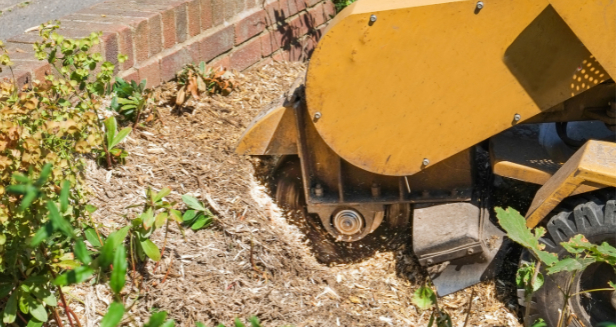
Stump grinding uses specialist machinery to reduce the stump into small wood fragments. The work is normally carried out below the surrounding ground level, although the required depth depends on the future use of the area.
Grinding is generally less disruptive than excavating the complete stump and root system. It does not remove every root extending through the garden, but those remaining underground usually decay naturally over time.
What Should Be Checked Before Grinding?
A professional tree surgeon should consider:
- The stump’s diameter and species
- The extent of visible decay
- Access for suitable machinery
- Nearby walls, paving and garden features
- The position of prominent surface roots
- The intended use of the area afterwards
- The required grinding depth
These factors determine how the work should be approached and whether any special preparation is needed.
What Happens to the Grindings?
Grinding produces a mixture of wood fragments and soil. Some material may be used to fill the initial hollow, but it can settle as the wood decomposes.
If the area is being prepared for turf, planting or hard landscaping, excess grindings may need to be removed and replaced with material suited to the intended finish. Planning this stage helps prevent an uneven surface later.
Why Professional Stump Removal Is Valuable
A rotting stump may appear easy to break apart manually, but the remaining timber and roots can be stronger below ground than they look. Attempting removal without suitable equipment may disturb a larger area of soil or damage nearby surfaces.
Professional stump grinding provides controlled removal to an appropriate depth while considering access, surrounding features and the plans for the garden.
Conclusion
An old stump that is beginning to rot does not always need immediate removal. It can often remain in a quiet area where it causes no obstruction and is intentionally retained for wildlife.
Removal becomes more worthwhile when the stump is unstable, creates uneven ground, obstructs maintenance or interferes with planned landscaping. If a decaying stump is causing problems in your garden in Waterlooville, Hampshire, The Tree Surgeon Waterlooville can assess its condition and recommend a suitable grinding approach without unnecessary work.
Call us on: 023 9200 1796
Click here to find out more about The Tree Surgeon Waterlooville
Click here to complete our contact form and see how we can help with your trees needs.